
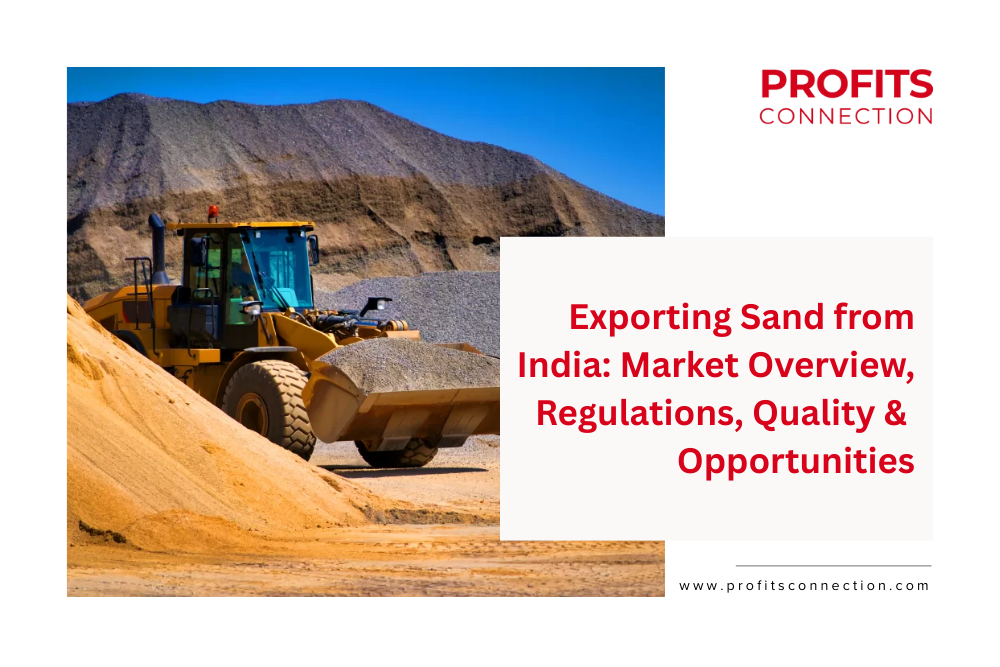
India is emerging as a significant global supplier of industrial and construction-grade sand. With strong natural reserves, expanding port infrastructure, and growing international demand, sand exports from India are gaining momentum in 2025 and beyond. This guide explains the types of sand exported, regulations, quality standards, certifications, packaging.
Overview of Sand Resources in India
India is naturally rich in sand deposits due to its extensive river systems, coastline, and mineral belts. These resources support both domestic industries and international markets.
Major sand varieties available in India include:
-
Silica sand
-
Quartz sand
-
Garnet sand
-
Manufactured sand (M-sand)
-
River sand (restricted for export)
India’s Position in the Global Sand Export Market
India currently ranks among the top 30 sand-exporting countries globally. With rising construction activity in Asia, the Middle East, and Africa, India is well-positioned to strengthen its share.
Key Growth Drivers
-
Infrastructure development in developing nations
-
Glass and ceramic manufacturing demand
-
Foundry and oil & gas sector expansion
-
Coastal erosion control projects in island nations
Indian Sand Market Size & Growth Outlook
The Indian sand market is projected to grow at a CAGR of approximately 5.10% from 2025 to 2033.
Industries Driving Demand
-
Construction & infrastructure
-
Glass manufacturing
-
Foundries & metal casting
-
Ceramics & tiles
-
Oil & gas (fracturing sand)
-
Water filtration plants
Importance of Sand in Industrial Applications
Sand is one of the most essential raw materials across industries due to its durability, chemical stability, and versatility.
Major Uses of Sand
-
Concrete & mortar production
-
Glass and fiberglass manufacturing
-
Foundry molds and cores
-
Ceramics and tiles
-
Paints, coatings & fillers
-
Water filtration and landscaping
Types of Sand Exported from India
| Type of Sand | Key Applications |
|---|---|
| Silica Sand | Glass, foundry, construction, filtration |
| Quartz Sand | Engineered stone, ceramics, paints |
| Garnet Sand | Waterjet cutting, sandblasting |
| M-Sand | Construction (eco-friendly alternative) |
Major Sand-Producing States in India
High-quality export-grade sand is sourced from:
-
Gujarat (Rajpardi, Bharuch, Kutch, Surat)
-
Rajasthan
-
Andhra Pradesh
-
Tamil Nadu
-
Karnataka
-
Odisha
👉 Gujarat is a preferred hub due to port connectivity and consistent silica quality.
Countries Where India Exports Sand
India exports sand to both developing and developed economies.
Key Export Destinations
-
UAE
-
Saudi Arabia
-
Qatar
-
Oman
-
Vietnam
-
Malaysia
-
Singapore
-
Bangladesh
-
Kenya
-
Tanzania
-
Maldives
Quality Parameters for Export Sand
International buyers prioritize consistent quality and tested material.
Common Quality Parameters
-
Grain size distribution
-
Purity (SiO₂ %)
-
Moisture content
-
Bulk density
-
Color & cleanliness
-
Low clay and organic matter
Certifications & Tests Required for Sand Export
Mandatory & Industry Standards
-
IS 383:2016 – Classification of construction sand (Zone II preferred)
-
ASTM / ISO standards – For silica, quartz, and industrial sands
Laboratory Tests Performed
-
Sieve analysis
-
Specific gravity
-
Moisture content
-
Loss on Ignition (LOI)
-
Chemical composition (XRF / ICP-OES)
-
Bulk density
Additional Documents
-
Phytosanitary certificate (where applicable)
-
MSDS (Material Safety Data Sheet)
-
Certificate of Origin
-
Test Analysis Report (COA)
Packaging & Logistics for Sand Export
Proper packaging ensures moisture control and contamination-free delivery.
Common Packing Options
-
FIBC (Jumbo Bags) – 1 MT
-
PP bags with LDPE inner lining
-
UV-treated & moisture-resistant bags
-
Anti-static bags (for industrial use)
Labelling Must Include
-
Product name & grade
-
Net weight
-
Country of origin
-
Exporter details
-
Batch number
Conclusion
India offers immense opportunities in the sand export business—especially for silica sand and industrial-grade materials. With correct sourcing, quality testing, certifications, and export documentation, businesses can build long-term relationships with international buyers.
High-quality, tested sand is always preferred in global markets.